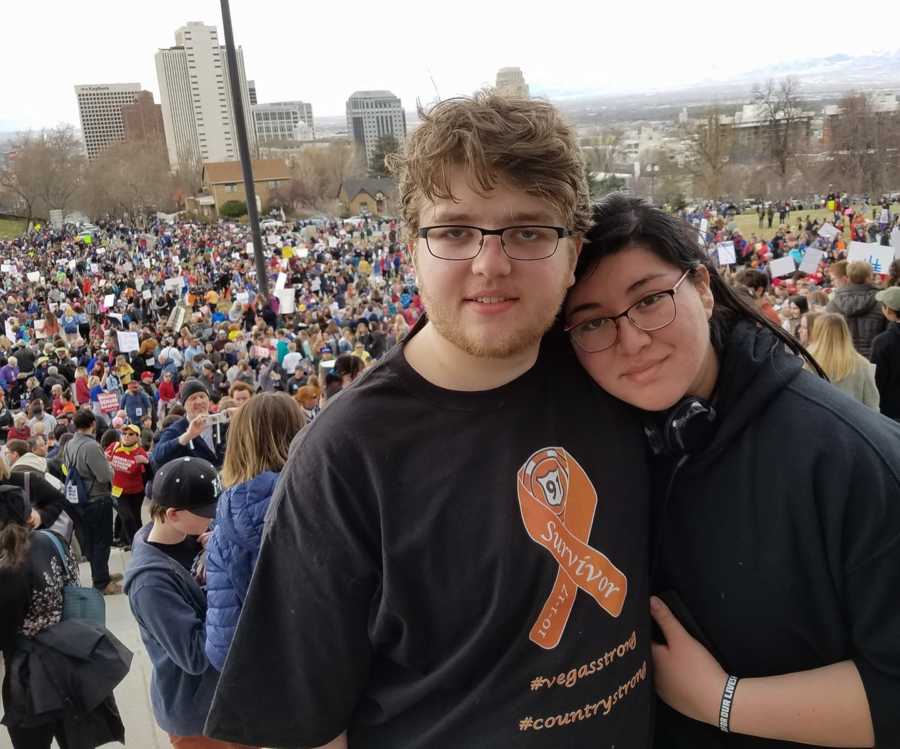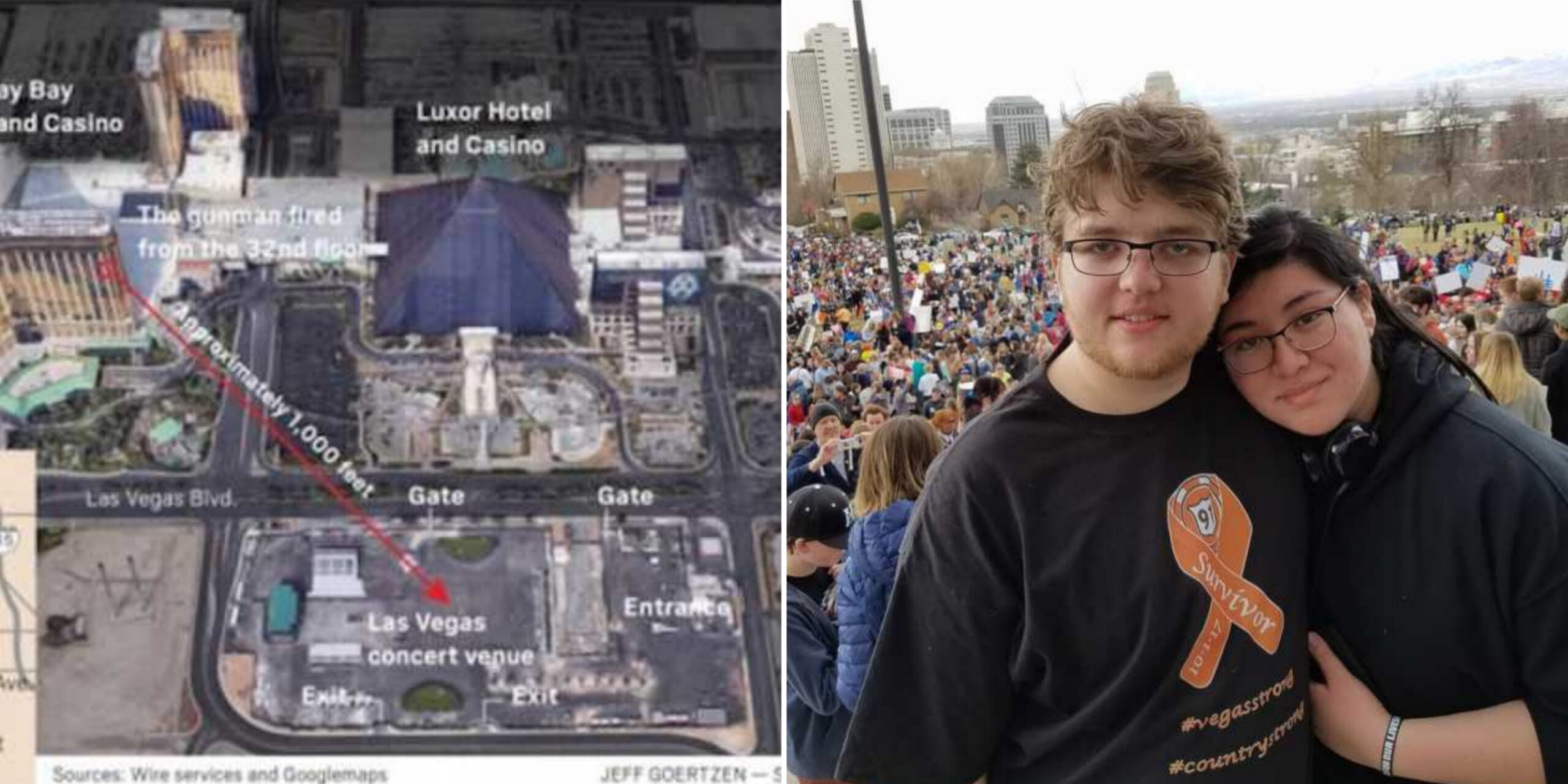
My name is Royce Christensen, and I was one of the people caught in the Las Vegas Massacre of 2017. I work as a security guard, handling everything from stadiums and casinos to big bars and random events along the Strip. Security runs in my family—my brother, my mom, and his now ex-girlfriend all work events with me. I had recently transferred from Houston to Las Vegas, and the shift in pace was jarring. In Houston, I was used to football games every Sunday; in Vegas, it was outdoor concerts whenever they happened. Work was scarce, so when I saw an opening for setup, performance, and tear down at a venue called Route 91, I was thrilled. It promised nearly a month of steady work, and I thought it would be straightforward—nothing too crazy.
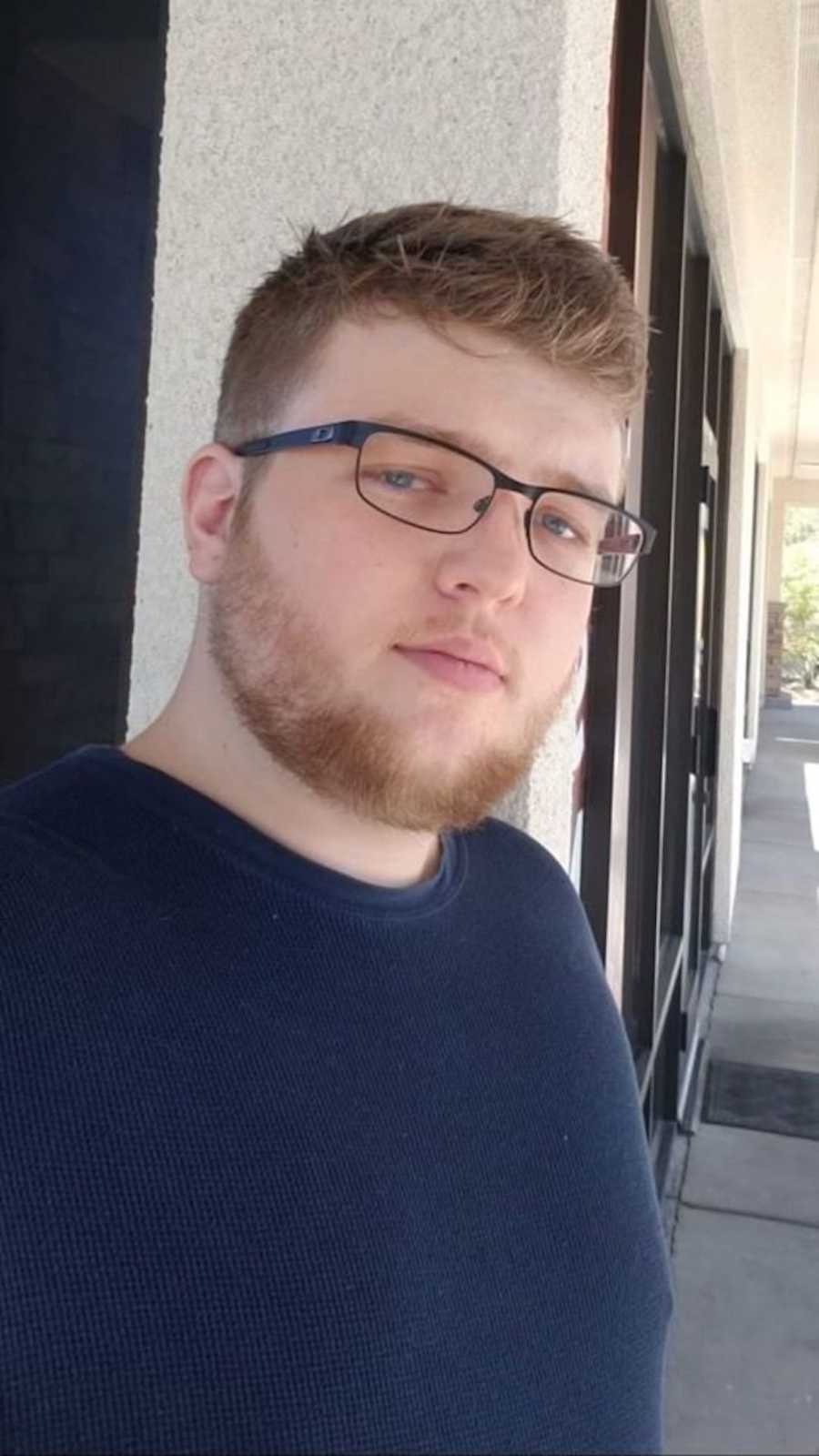
Everything started off smoothly. Setup was easy, and the crew let us have water and sports drinks for free. I even made a friend during the graveyard shift, a guy with a wicked sense of humor who was the first person to really make me feel welcomed in the company. When the event started, I was moved from gate security to backstage, tasked with sitting at a trailer and checking credentials—a simple job. On the last night, I arrived without my phone because I had been caught using it at work the day before. I focused entirely on the job, trying to make time pass quickly.
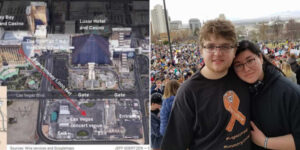
Then, at 10:05 P.M., everything changed. I was the closest security guard inside the event to Mandalay Bay when the first shots rang out. At first, I thought they were fireworks or some idiot setting off M80s to scare us. But then the sound went “full auto”—rapid, relentless, terrifying. The repeated banging was unlike anything I’d ever heard, and it still haunts me. The screams of people in pain and terror mixed with the staccato of gunfire made a sound I’ll never forget. I heard the stage lights flash and an announcement asking people to evacuate, followed by someone backstage shouting, “This is actually happening!” That’s when I realized this was no prank—this was an active shooting.
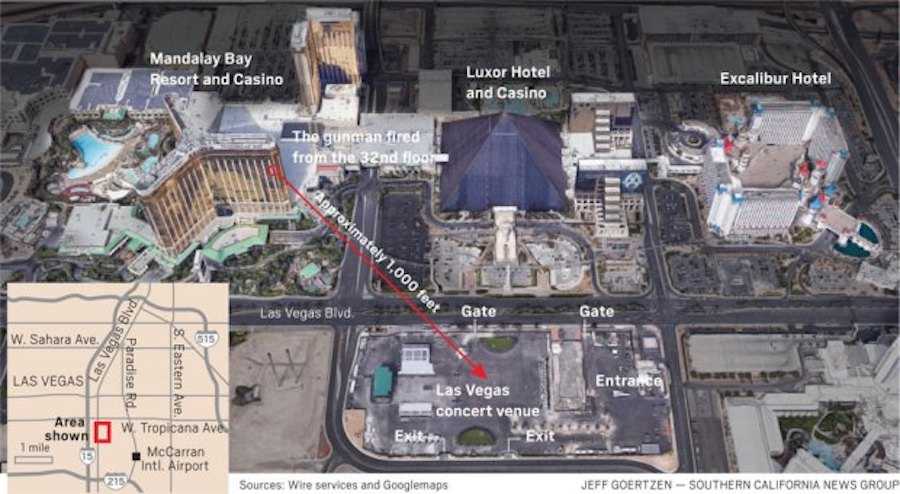
I immediately went to my coworker, trying to get him to leave with me. Bullets came close enough that my hair was showered in shards of metal. I thought I was going to die. I started to accept that I might not see my family or my fiancé again. But I knew I had to do everything I could to protect the 40–50 people with me. I kept thinking about what I’d do if the shooter came after us—though I didn’t know he was shooting from a hotel. I mentally prepared to fight him if necessary, just to buy time for others to escape.
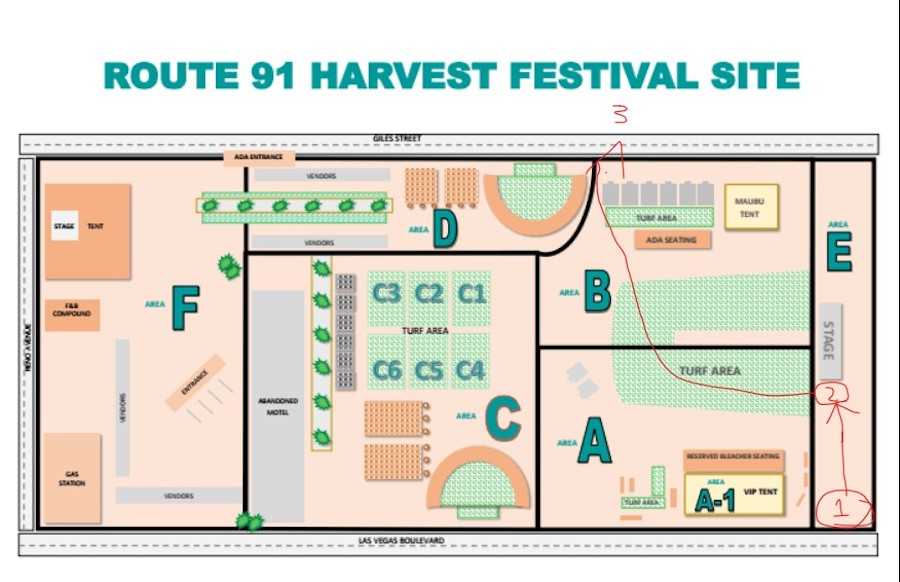
Our protocol as unarmed security during an active shooter is simple: 1) Run, bringing as many people as possible; 2) Hide; 3) Fight as a last resort. I told my partner, “We need to get out now!” Shocked and in disbelief, he replied with a straight face, “But what about my lasagna?” That moment captures how surreal everything was. I made a beeline for the nearest gate, but I didn’t get far before my boss pulled me behind some tour buses as panicking concertgoers rushed past. Around 40–50 people were crowded together, and only three of us—plus a lone police officer—were trying to protect them.
I considered running again when the gunfire seemed to pause, but it started up too quickly, wave after wave. By the third or fourth round, bullets were hitting dangerously close, kicking up clouds of dust around us. Shrapnel rained down on my head as the shooter targeted the stage. The officer had us organize our little group, telling everyone to turn off lights and stay down. I helped the wounded, applying limited first aid—tourniquets, pressure, anything to keep people alive. Five people were with us initially, soon joined by a woman drenched in blood and a man whose wrist was nearly blown off. He calmly asked, “Where do I go?” as if he were in shock. It felt like a war zone.
A medic appeared from near the Tropicana—a big, Santa Claus-looking man whose skill and calm I’ll never forget. Around us, chaos and screams erupted. Some of our group tried to stand and confront the shooter, while a drunk woman in a cocktail dress asked where she could use the restroom as bullets flew overhead. The absurdity of it all was overwhelming.
After what felt like an eternity, the gunfire stopped. The silence was deafening. I had no idea whether my family was safe, and I couldn’t call my fiancé to say goodbye because I had left my phone at home. An hour later, SWAT cleared the venue, and we were allowed to evacuate. My supervisor had me check for survivors and assist those trying to remove the dead with wheelbarrows. Walking through the field was unimaginable—so many people had been shot that you couldn’t walk three feet without stepping on a body. Helping those who were still alive, I finally understood the scope of what had happened. My manager told me, “You’ve done an amazing job, now get the fuck off this field.” It was the first moment I truly processed it. I walked out to streets stained with blood, seeing people trying to save their loved ones or accept the impossibility of their loss. A pickup truck loaded with wounded people screeched past, honking, and I found myself laughing—because it was just so insane.
The images of the victims are seared into my memory. The faces, the pain, the horror—they will never leave me. In the end, my family survived without physical injury, though I lost a friend who had been shot in the throat and drowned in his own blood. Even after the shooting, I faced people accusing me of being a crisis actor, questioning the reality of my grief. It was a cruel reminder that even in tragedy, people can doubt your truth.
I don’t see myself as a hero. I was simply in the right place at the wrong time, doing my job. Over time, I realized that the people who died did not die because of me. In fact, I helped others survive. That’s something I can be proud of. In moments of unimaginable fear and chaos, regular people stepped up to help one another—and that, above all, is what we can take away from such tragedies. It’s the reminder that even in darkness, the best of humanity can shine through.