“You are never given more than you can handle.” It’s a phrase I hear often from people searching for the right words to comfort me after losing my son to cancer. I want to say this gently, but firmly: that’s not true. We are given more than we can handle. The Tate family has been given more than we could ever imagine bearing.
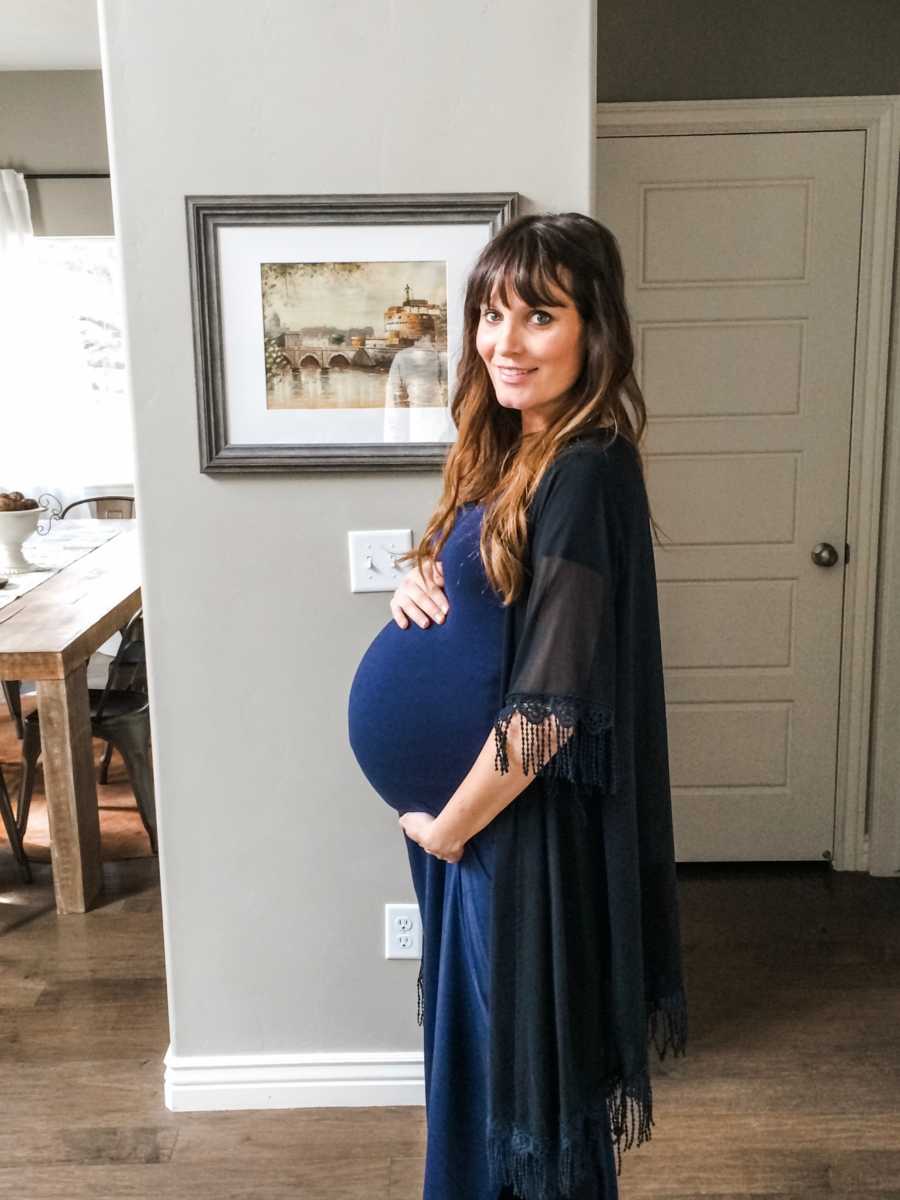
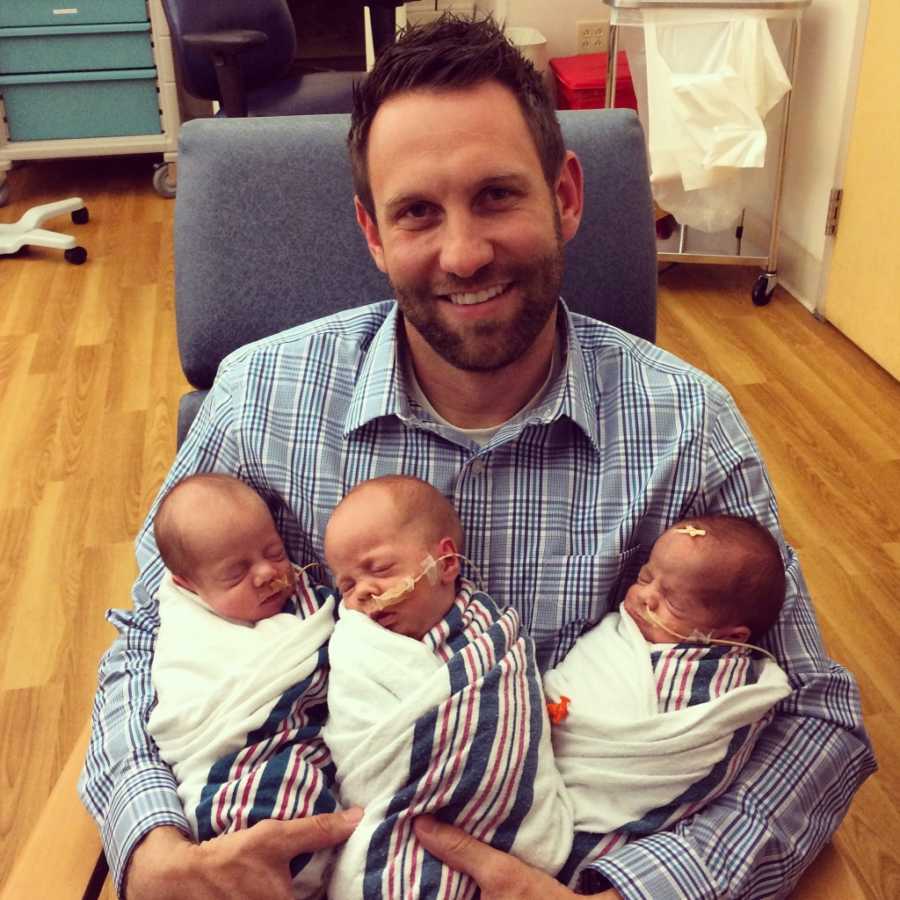
In September of 2014, my wife and I sat in an OBGYN’s office staring at a screen that showed three small, black-and-white circular shadows. Three. My face went pale, and I felt my blood drain from my body as I tried to process the reality in front of me.
“You two are really good at making babies,” the doctor said.
The nurse quickly brought me water as I wobbled in my chair, trying not to faint—not from excitement, but from sheer panic. We were expecting triplets. And by the way, we already had three children at home, ages eight down to three. The thought of raising six kids was… overwhelming, to say the least.
When the babies were born, they were healthy, and the joy they brought was indescribable. Life, however, became a whirlwind of sleepless nights and round-the-clock rotations for feeding, diapering, and consoling. I remember driving to work one morning after only three hours of sleep, thinking to myself, I’ve definitely been given more than I can handle. Little did I know, this was only the beginning.
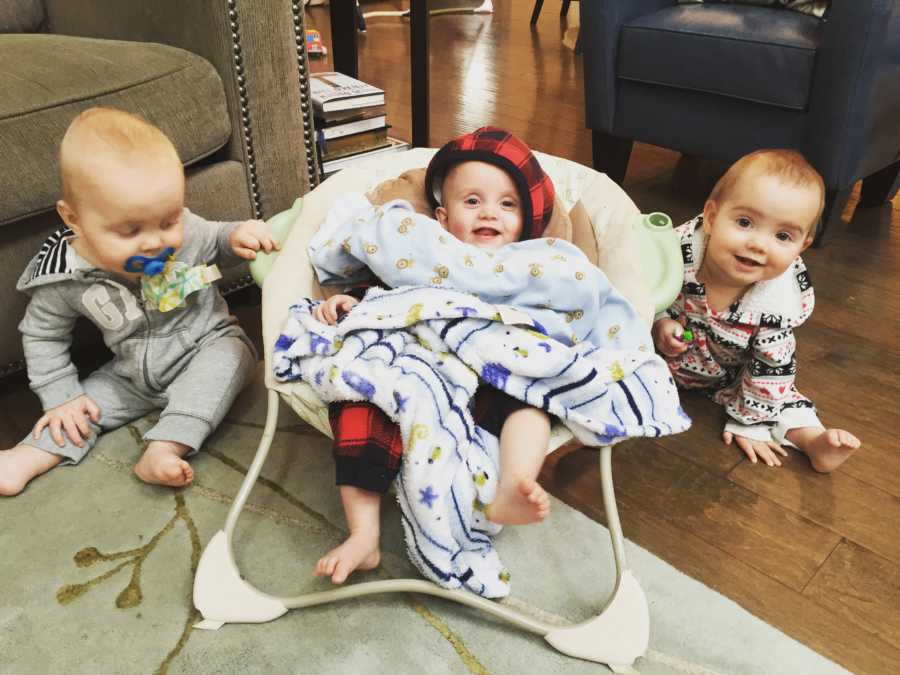
By December 2015, we noticed one of the triplets, Hayes, seemed unusually tired. He needed extra naps and lacked the energy his brother and sister displayed as they crawled and played. At first, we chalked it up to a virus after a doctor’s visit, but Hayes’ lethargy didn’t improve. He began vomiting, and yet, when we returned to the doctor urging further tests, the response was the same: “It’s a virus.” The despair was suffocating, but our parental instincts told us something was terribly wrong.
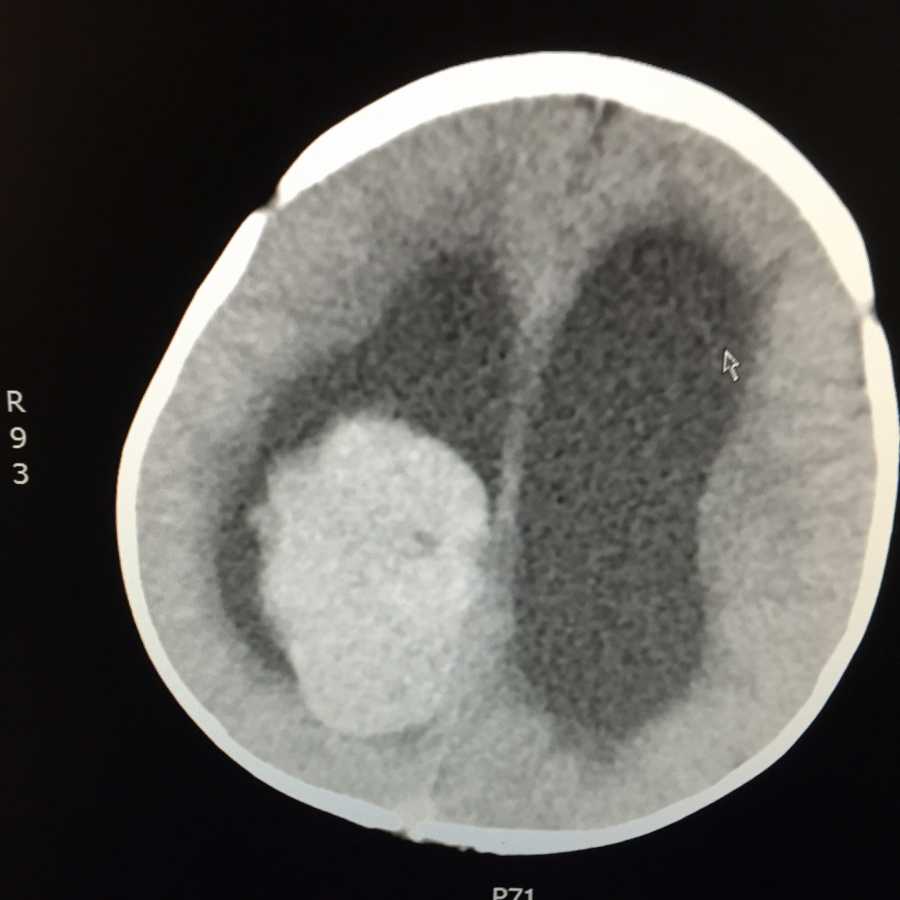
On January 7, 2016, our lives changed forever. We took Hayes to the ER, and this time they performed a CT scan of his brain. I remember staring at the office door, heart pounding, knowing that whatever happened next would alter our lives irreversibly. When the doctor walked in with a sympathetic, serious look, she said in a monotone voice:
“Your baby boy has a brain tumor. It’s taking up one-third of his brain. He will need emergency surgery tomorrow. I am so sorry.”
A piece of me broke that day. I still carry the image of that scan in my mind.
The surgery to remove the tumor was successful, but the pathology report delivered another blow: Hayes had cancer. Not only cancer, but a rare type called Choroid Plexus Carcinoma—so rare it appears in just one in every three million cases.
The treatment was grueling: five rounds of chemotherapy, each consisting of 28 inpatient days, followed by a stem-cell transplant. My wife, Savanna, stayed with Hayes in the hospital while I managed our other children, work, and the grueling back-and-forth of hospital shifts. Each day began at 6:00 a.m., feeding and dressing the babies, getting the older kids ready for school, rushing to work, then heading straight to the hospital to be with Hayes until late at night. This routine continued for over 150 days and nights.
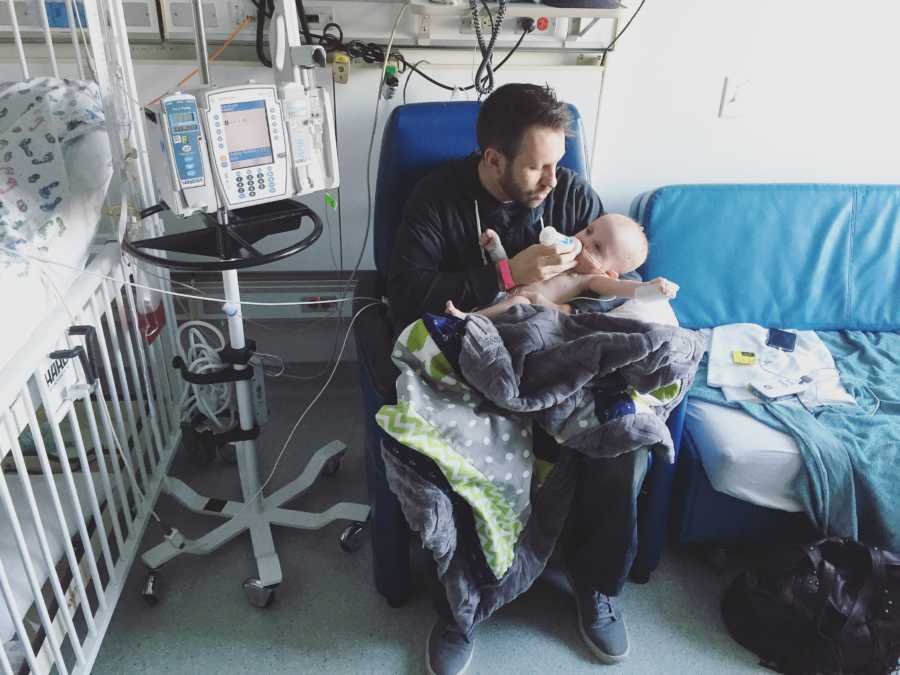
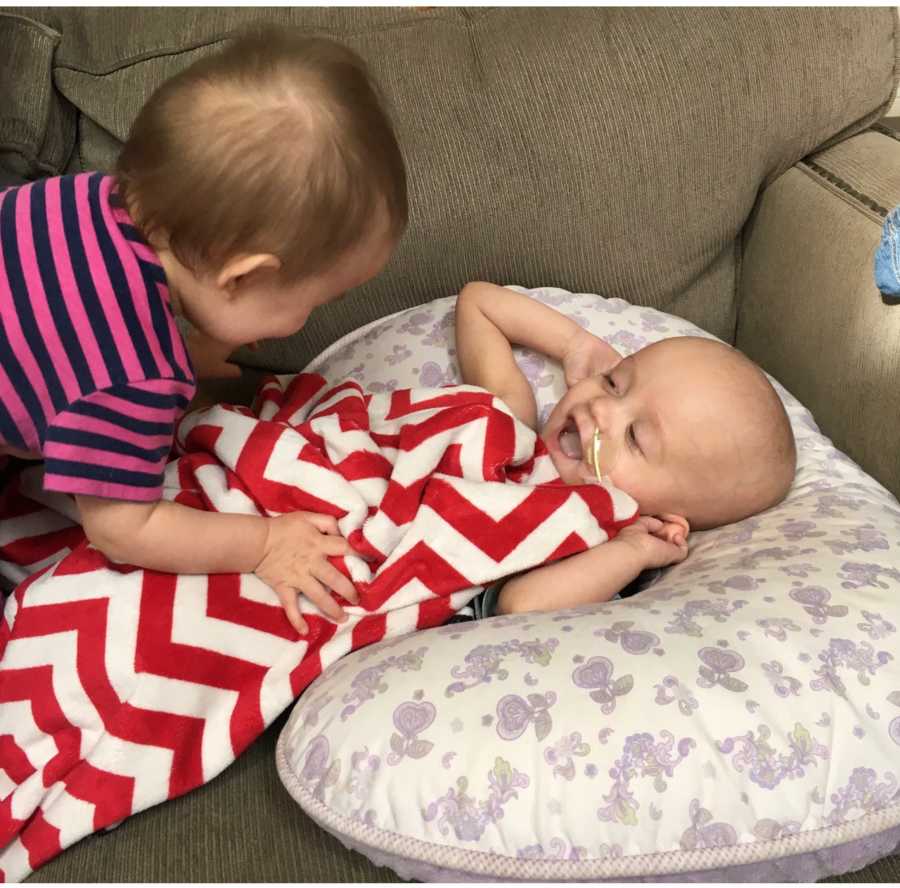
Through it all, Hayes was a little angel. He smiled constantly, engaged with nurses and doctors, and endured the grueling physical and occupational therapy required after losing some abilities due to chemotherapy. He fought with courage, grace, and an innocence that left us humbled every day.
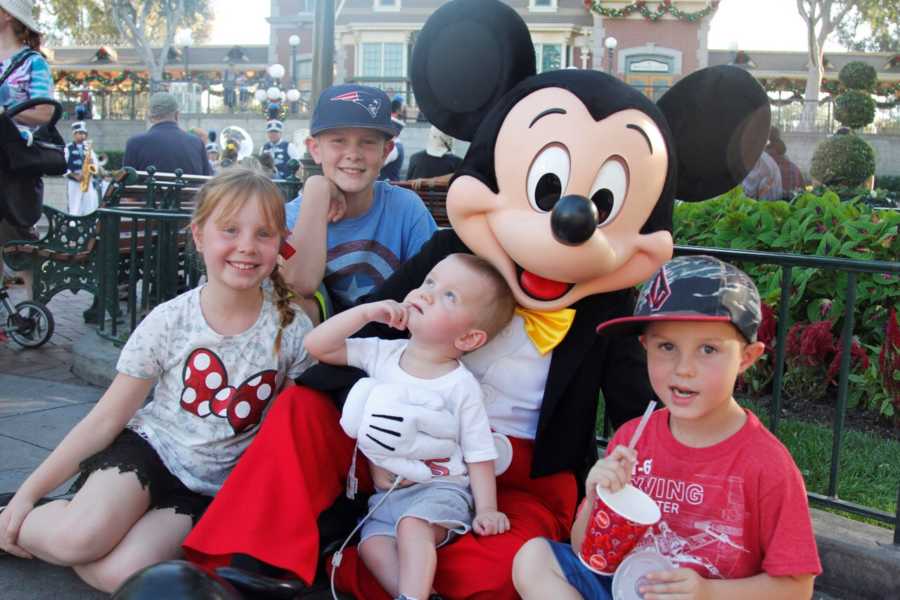
Finally, after a successful stem-cell transplant, Hayes went into remission. I have never felt such joy in my life. To celebrate, we took the family to Disneyland—a magical, worry-free escape. Hayes loved Mickey Mouse, and seeing his tiny face light up when Mickey knelt beside him was a moment of pure, unfiltered happiness. For a brief time, cancer was behind us, and our family could simply be together.
But the relief was short-lived. On the drive home, Hayes began vomiting. We assumed it was the formula, but the fear gnawed at us. The next day, an MRI confirmed our worst nightmare: Hayes’ cancer had returned, and this time, it was terminal.
The second worst day of my life unfolded before me. Hayes’ frail little body was tired and scarred from surgeries. We made a choice to give him the best possible quality of life, surrounded by his siblings and love, without the constant presence of monitors and physicians.
One night, as he lay resting, I leaned over his crib with tears streaming down my face. I whispered, “I’m sorry, Hayes. I can’t take this away.” And with perfect clarity, my tiny boy, who had only ever said one word before, spoke: “It’s okay.” Then, leaning in to tell him we loved him, he said: “I love you.”
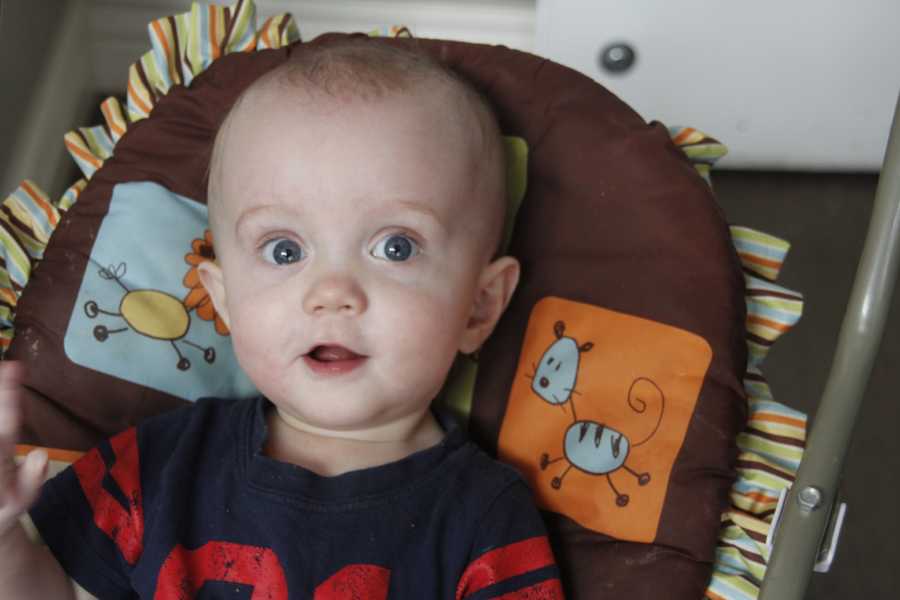
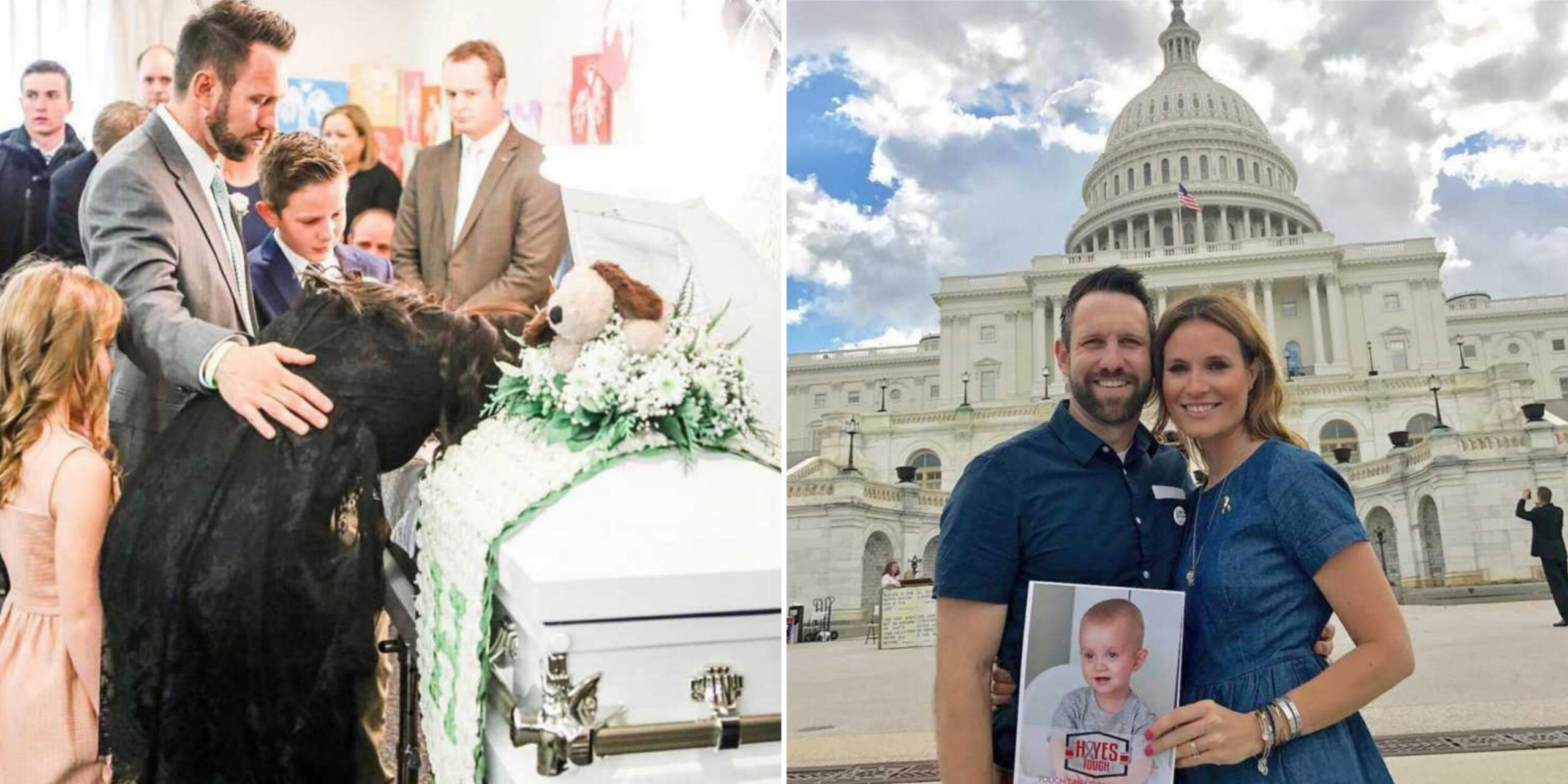
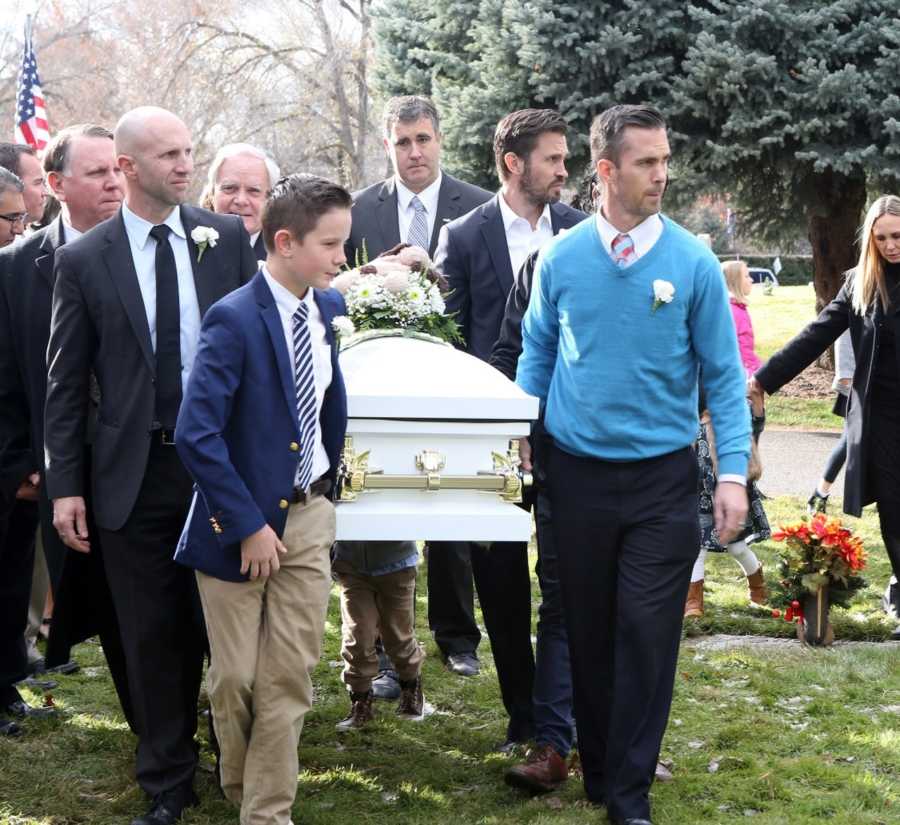
Hayes passed away a few days later, on December 3, 2016. We held him, kissed him, cried, and smiled, cherishing our final moments together. I carried him to the car myself, holding him close as we prepared to lay him to rest, feeling both the weight of grief and the beauty of the love we had shared.
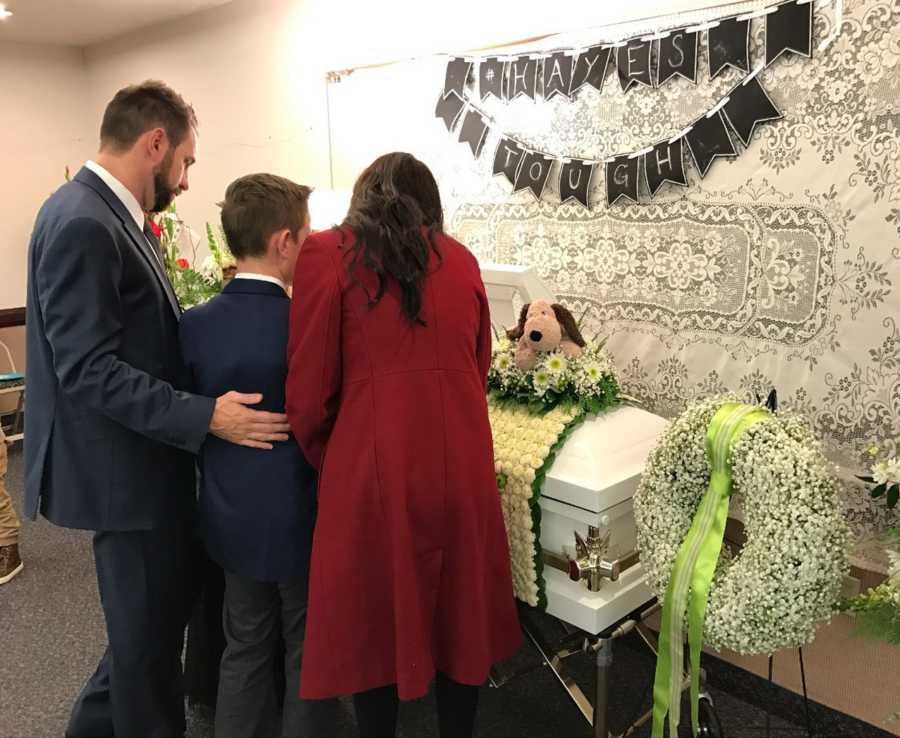
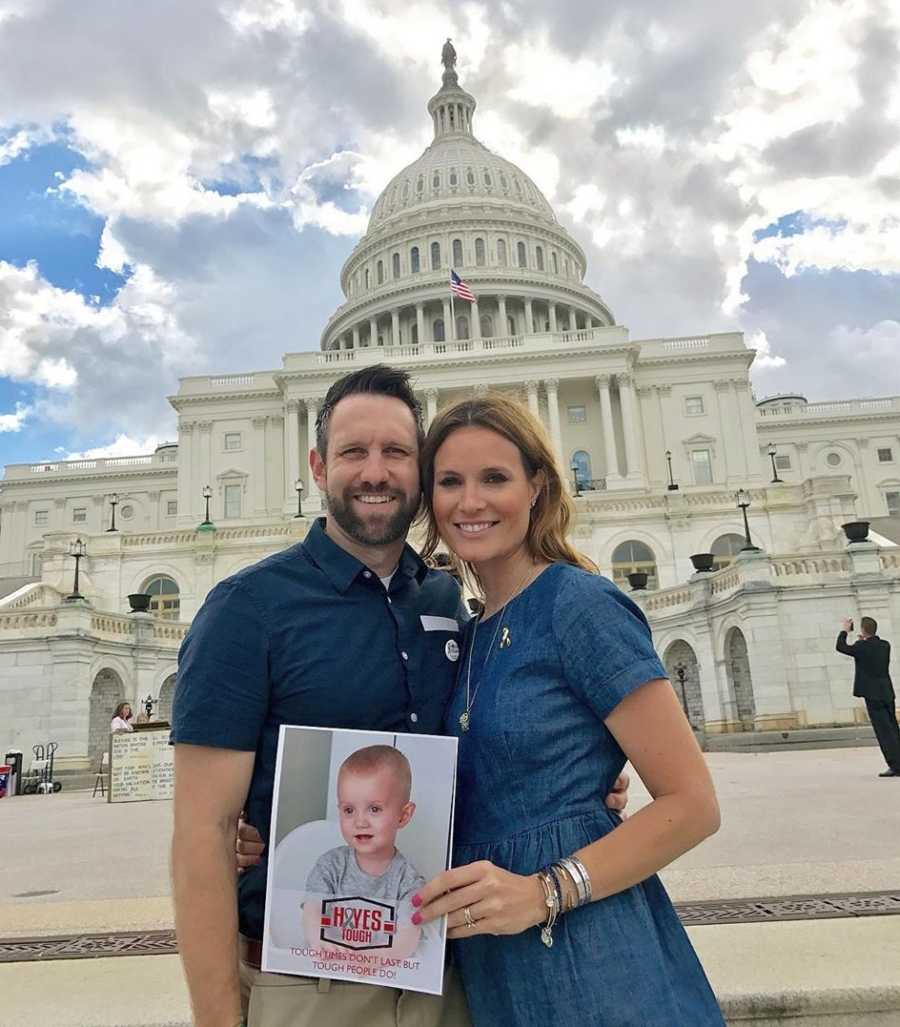
In Hayes’ honor, we started the Hayestough Foundation, raising over $500,000 in just two years to support families battling pediatric cancer. I also wrote The 20 Month Legend, a story of hope, love, and perseverance in the face of overwhelming odds.
We are given more than we can handle. Every day, life hands us challenges too great to bear alone. But sometimes, the miracle is simply waking up and facing the world, no matter how cruel it seems. Hayes taught us that, in even the darkest moments, hope, love, and resilience can shine through.