No one ever tells you just how hard it can be to have children when you’re gay. Coming out is a milestone in itself, but life doesn’t suddenly become easy afterward. Challenges remain—how people react to your love in public, how your workplace treats you, and, perhaps most daunting, how to create a family. Even in California, in 2020, LGBTQ people still face barriers simply because of who they love.
For heterosexual couples, the story often seems simple: boy meets girl, they fall in love, marry, and start a family. But for LGBTQ couples, the path is rarely straightforward. There is no “normal” route to parenthood. Adoption, foster-to-adopt, surrogacy, IUI, IVF, reciprocal IVF—even the “turkey baster” method—are all options, but every choice is emotionally complex. Each couple must navigate these paths carefully, knowing the journey may be long and filled with unexpected hurdles.
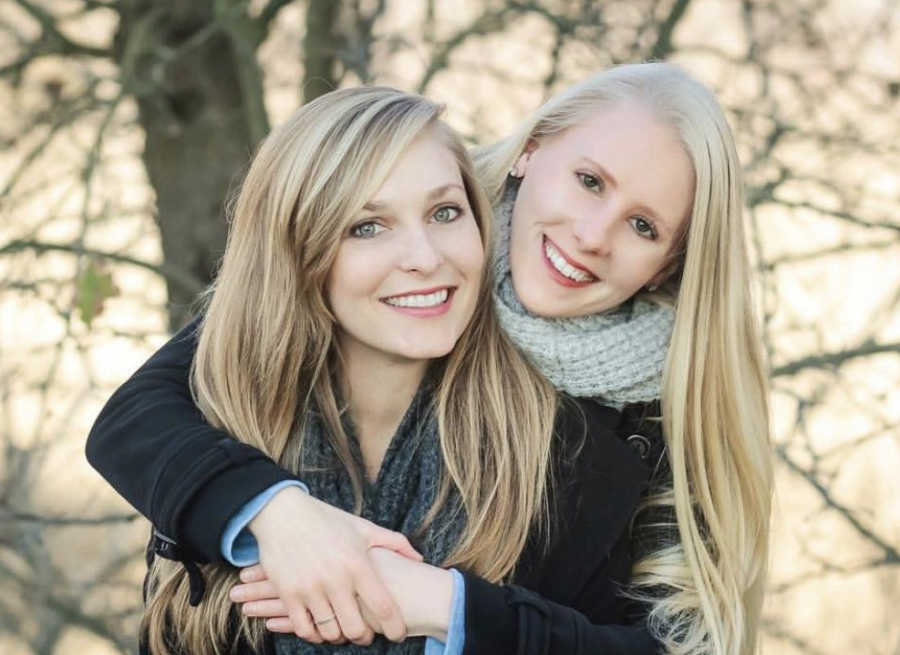
For my wife and me, our story began like many love stories: girl meets girl, they fall in love, come out to family and friends, marry in a civil union (not fully recognized by law at the time), then marry again when same-sex marriage became legal, and finally, set their sights on starting a family.

We intentionally kept our wedding small, choosing to save for a family instead. I had always dreamed of a big family, but I hadn’t realized that, as a gay couple, creating one would come with significant financial and emotional costs. After exploring all the options, we decided that carrying a baby ourselves was important. We wanted to each play a physical role in creating life. Reciprocal IVF became our path: using my eggs fertilized with donor sperm, with embryos transferred to my wife. It was perfect—she would carry our child, and both of us would be biologically involved. While my family was supportive, Katie’s mother initially called me a “surrogate,” suggesting Katie needed her “own baby.” Those words stung, but our commitment to each other never wavered.
The journey began with intense research, countless questions, and clinic appointments. Our first meeting with the doctor was full of curiosity and anxiety: What were our chances of success? Any risks of abnormalities? Where should we get donor sperm? At 23 and 25, we were reassured our chances were high—but nothing could truly prepare us for what lay ahead.
When egg retrieval day arrived, I experienced cramping throughout the three-hour drive. The procedure itself left me sore, but exhilarated—our embryos were soon to be created. Then the call from the embryologist came: the first vial of sperm hadn’t fertilized any eggs, and out of 13 eggs retrieved, only two survived. Rescue ICSI was attempted on those two, but the odds were slim. For days, we clung to hope while the internet offered little comfort. Then heartbreak struck: the first day, only one egg survived; the next day, none. Thirteen eggs down to zero. We were crushed.
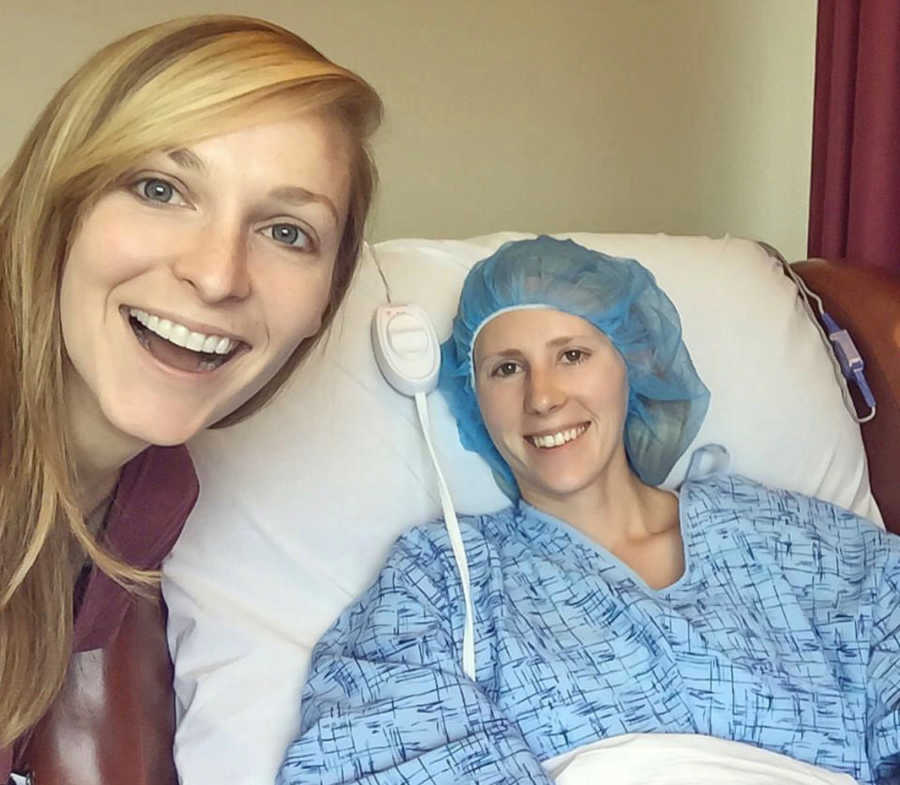
I blamed myself, questioning if something was wrong with me. My wife reminded me it wasn’t our fault. We leaned on each other, crying, lying in bed, unsure how to move forward. Eventually, we explored embryo adoption—a path we hadn’t anticipated. Borrowing money we didn’t have, we went ahead, matched with donors, signed papers, and arrived at the clinic for transfer day. But when the nurse, the same one who had supported us from the beginning, arrived, we realized this wasn’t what we truly wanted. Tears fell. We left with no embryos transferred, deciding to try IVF once more.
The second attempt brought hope. Egg retrieval went smoothly, and this time, 11 of 18 eggs fertilized. Embryo transfer day arrived, and we watched two tiny flickers of light on the ultrasound screen. But excitement turned to fear when Katie woke with cramping and blood. Driving three hours to the clinic, we discovered one baby remained alongside a blood clot four times its size. It seemed hopeless.
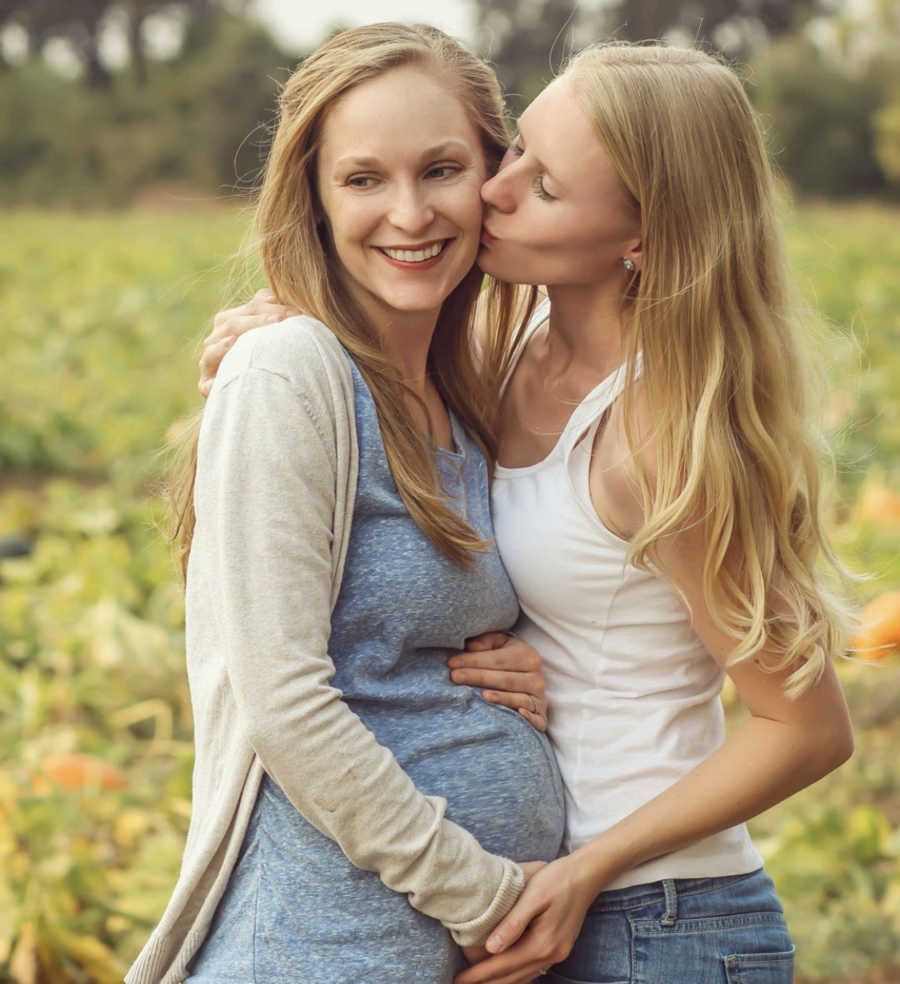
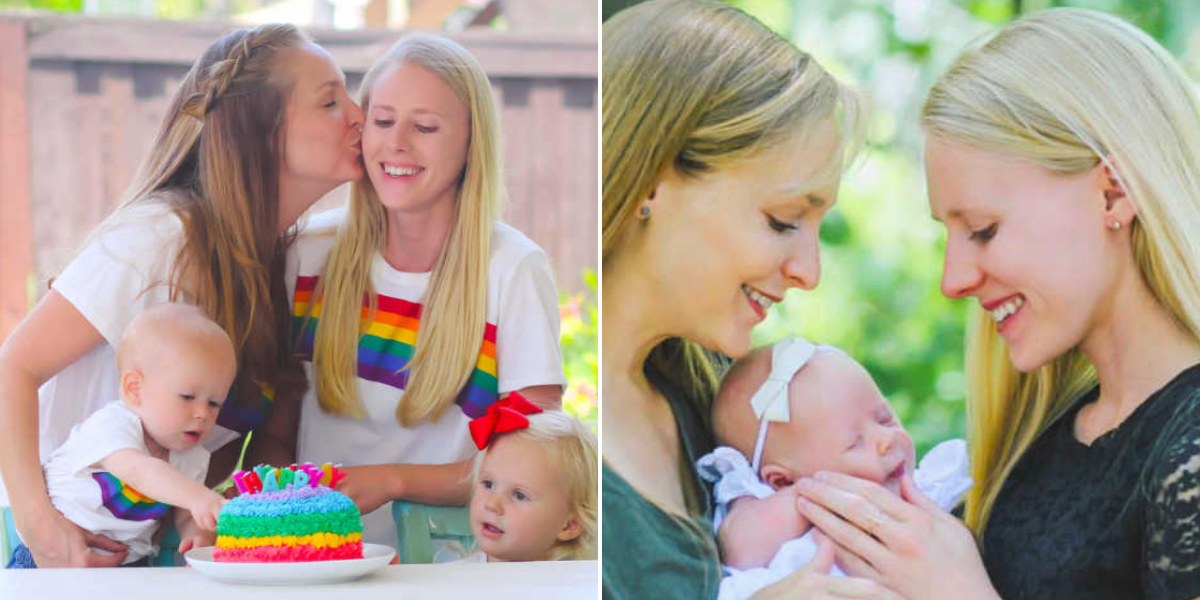
Time passed, and our baby eventually outgrew the clot. By the third trimester, the pregnancy was no longer considered high-risk. Still, it wasn’t until our daughter’s birth that it truly felt real. Seeing her healthy, perfect, and ours was a moment of disbelief and immense joy. Holding her for the first time, we were speechless, thinking back to her earliest photo—her embryo.
A year later, we pursued our second child. Using frozen embryos, we hoped for an easier process. The transfer went smoothly, but anxiety returned with blood tests indicating potential miscarriage or ectopic pregnancy. Weeks of worry passed, and then the miracle: a heartbeat. Eventually, another healthy baby girl was born, leaving us in awe once more.
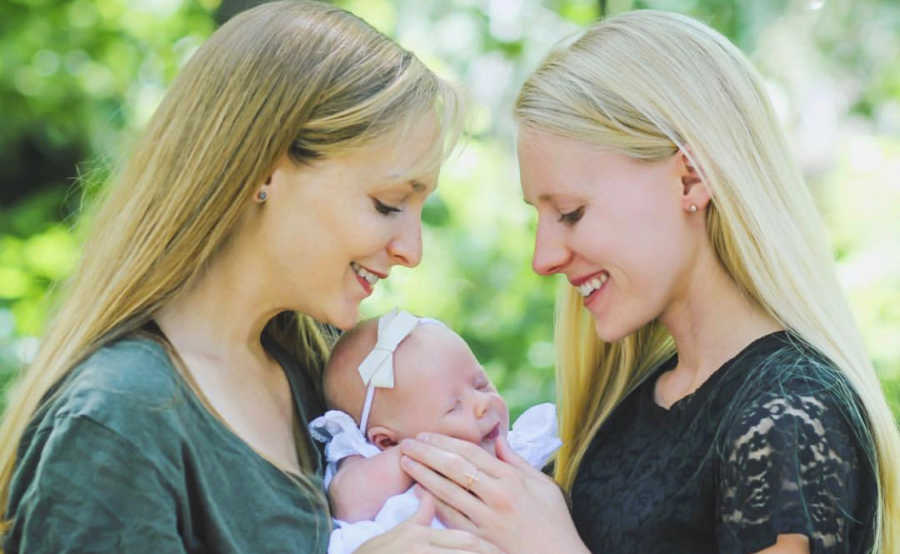
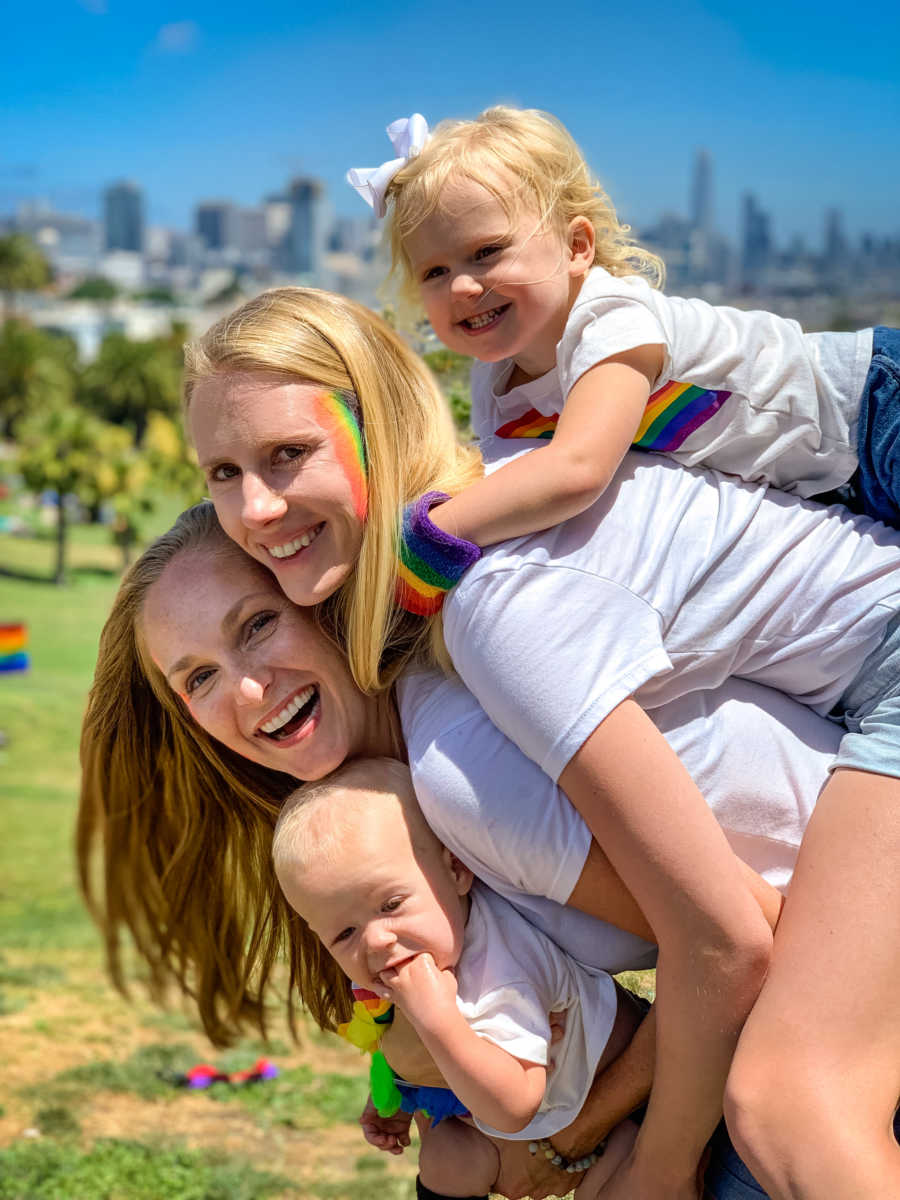
Our journey to parenthood was far from easy—thousands of dollars, emotional and physical pain, and hurtful comments about what we were doing. Yet none of that mattered the moment we held our daughters in our arms. Love had triumphed.
Life together hasn’t been easy—coming out, marriage, daily challenges as a gay couple, and the path to having children were all difficult. But I am grateful for the courage to live authentically, for my beautiful wife, and for the family we built together.
We began sharing our story online, hoping to connect with other LGBTQ families, offer hope, and inspire those just starting their journeys. Our experience shows that even in a world that can feel unwelcoming, love, persistence, and support can create miracles. Our daughters grow up surrounded by love, and that is what truly matters.